The one-club challenge keeps the employer constant while players, responsibilities and objectives change. Its central problem is succession rather than a rule against adapting the tactic.
Reviewed against sources available on 2 November 2026. Preview behaviour and final-release details may differ.
Set the challenge rules
Choose the commitment period or finish line before starting. A fixed number of seasons and a specific sporting achievement create different projects. Decide how dismissal ends the challenge and whether an international appointment is allowed alongside the club job. These are editorial house rules, not mandatory FM27 mechanics.
Define the part of the club identity you want to preserve: an academy pathway, a recruitment policy or a connected playing idea. Keep it concrete enough to evaluate, but avoid a rule that makes every necessary tactical adaptation look like a failure.
| Decision | Record before starting |
|---|---|
| Starting scope | Club, loaded database and actual obligations |
| Difficulty | Editorial and dependent on the chosen save |
| House rules | Eligibility, exceptions and finish line |
| Evidence | Keep dated notes rather than assumed game values |
Choose the starting project
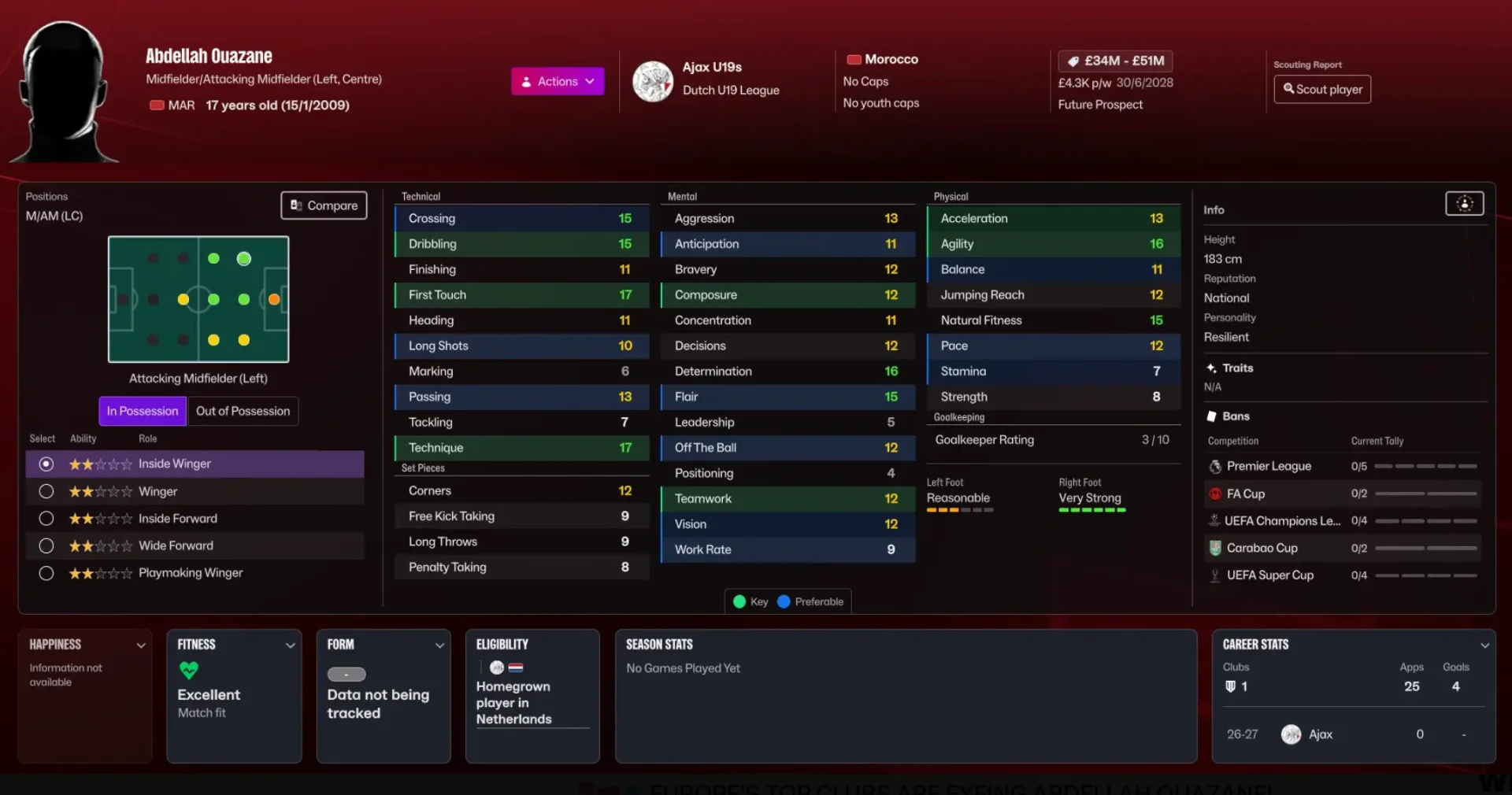
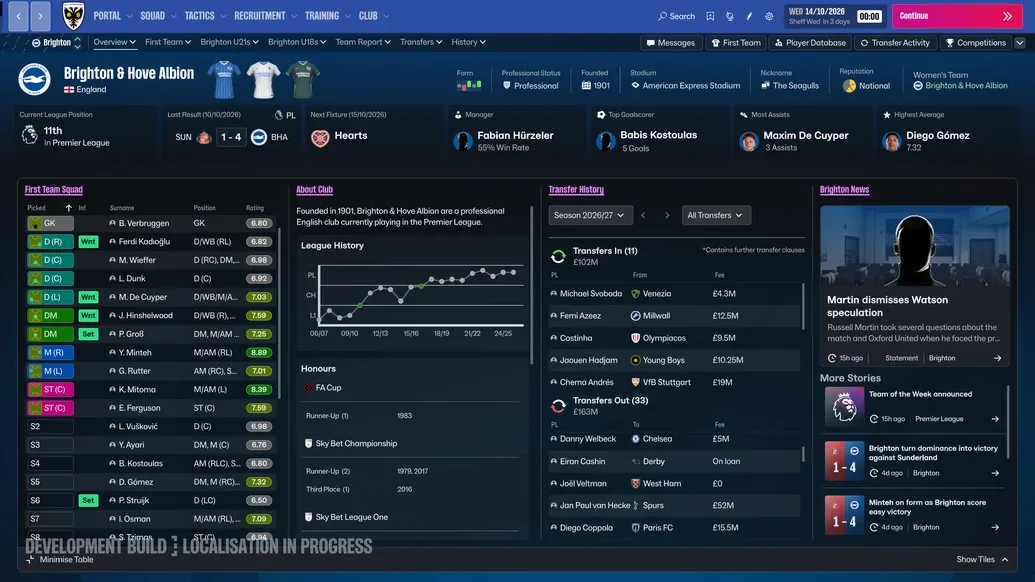
Map the current squad and the likely order in which responsibilities will need replacing. Avoid placing all future succession on prospects competing for the same position. Give each developing player a realistic next step and keep an alternative when progress or opportunity does not match the original plan.
Bayern is our succession-planning example; Barcelona provides an academy-centred alternative. Neither recommendation supplies verified starting budgets or guarantees a strong future intake. Read the selected save’s actual squad and board brief before choosing the club and the first two-season objective.
Review the project without rewriting its rules
At season end, review three horizons: what the next match needs, what next season’s squad lacks and which longer-term responsibility has no successor. The horizons can conflict. A useful immediate signing may block a prospect, while refusing all experience can leave a development plan without dependable cover.
Keep evidence of the original plan and the reason for each major revision. You are managing a changing club, so adaptation is part of the challenge. If the attraction becomes choosing a completely new environment rather than solving the next internal problem, the journeyman format offers a different experience. This page measures continuity and decision quality without inventing a universal success score.
Keep a separate succession sheet for responsibilities rather than names. If the tactic changes, revise the future job description before choosing a replacement. This prevents a prospect from remaining on the long-term plan merely because they suited a role the first team stopped using two seasons earlier.
Sources & verification
Article reviewed on 2 November 2026. Each source has its own verification date. Guidance is editorial analysis unless explicitly attributed to an official announcement.
- Official sourceFM27 Training and Tactical Effectiveness — system contextReviewed 2 November 2026